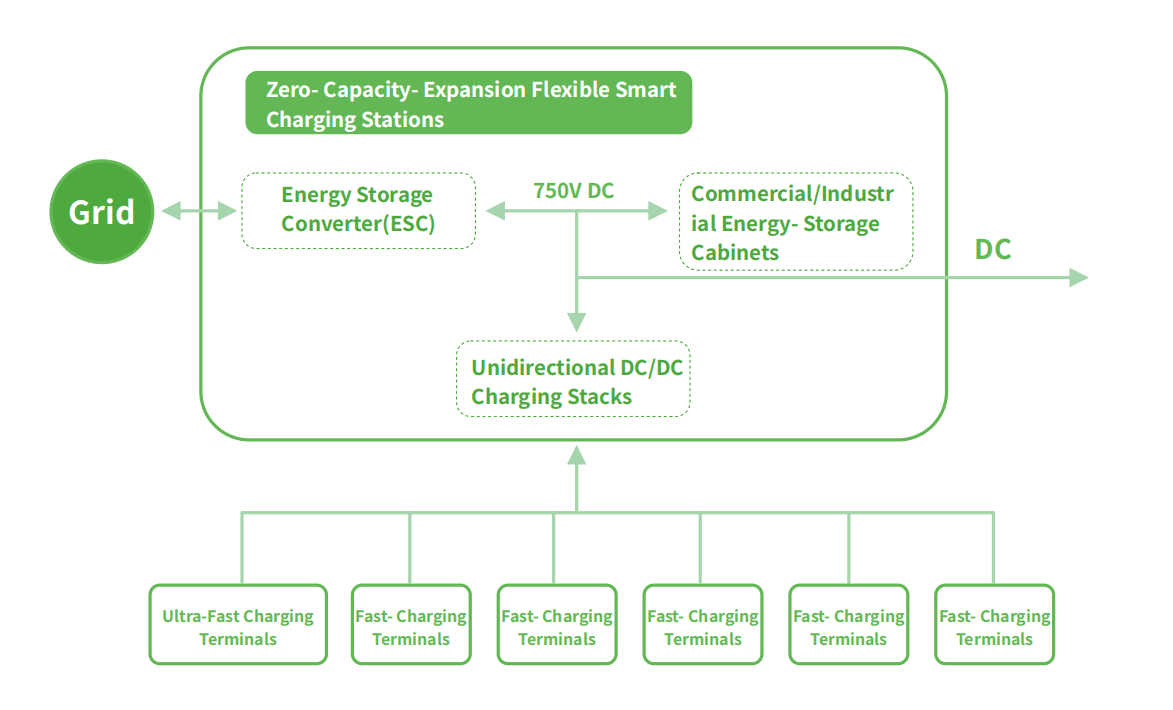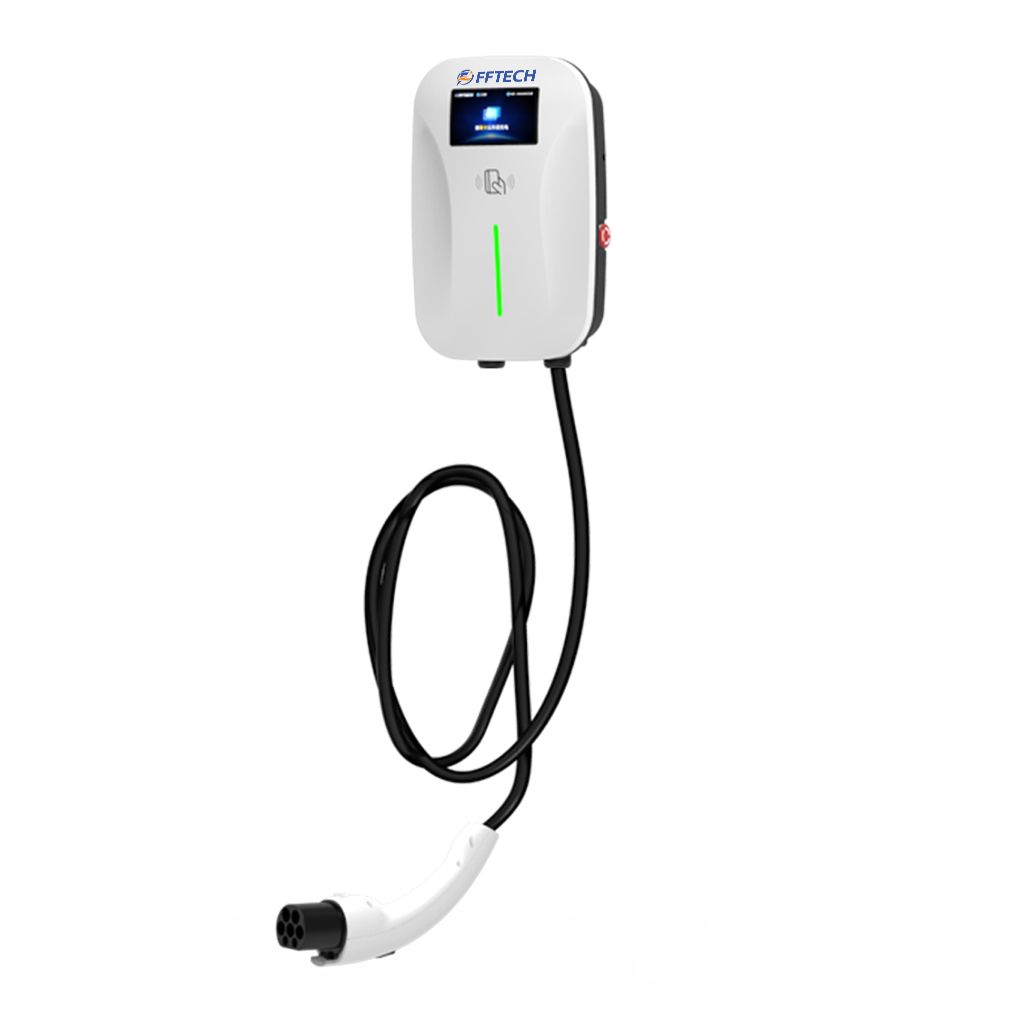
Leveraging years of expertise in the new- energy charging sector, we ad dress power- supply challenges in highway service areas, aging residential districts, and remote towns-where infrastructure is insufficient, transformer expansion is difficult, and DC chargers are scarce. We deliver a zero- capacity- expansion, Intelligent, flexible charging stack solution, offering end- to-end EPC services (planning. equipment selection, construction, O&M) for efficient, safe, and scalable charging deployments.
CHARACTERISTIC
Energy Integration & Efficient Utilization
Charging Mode
Supports constant‑current and constant‑voltage charging. It automatically adjusts output power according to battery capacity and state‑of‑charge; power is reduced for low‑charge or nearly full batteries. Grid‑sourced energy can be buffered in energy‑storage cabinets prior to EV charging to improve overall energy utilization.
Discharging Modes
Supports constant‑current discharge. Power is modulated based on system load and battery status. Surplus energy can be fed back to the grid, enabling bidirectional energy flow.
Energy-Scheduling Management
Transformer‑Load & Tariff‑Based Scheduling
Dynamically adjusts battery charge‑discharge strategies based on transformer load and peak‑valley electricity prices. Schedules load operations by demand and battery status to optimize efficiency.
Load‑Driven Power Allocation
Allocates power among multiple EV chargers based on load demand and battery health. Real-time monitoring refines charging strategies and balances loads.
Remote Platform Scheduling
Communication & Data Exchange
Charging stacks connect via multiple protocols to upload status data.
Command Reception & Coordination
Charging stacks receive platform‑issued commands and perform coordinated collaborative operations.
Remote O&M Support
O&M technicians conduct remote fault diagnosis, parameter adjustment and software over‑the‑air updates to minimize on‑site service visits.
Safety & Environmental Protection
Thermal Management
Controllable forced‑air cooling with adjustable fan speeds guarantees reliable operation. Intelligent liquid‑cooling solutions deliver precise temperature regulation for batteries.
Fire‑Safety Protection
Integrated HFC‑227ea automatic fire‑suppression devices and multi‑composite detectors (temperature, CO, VOC) work together with cell‑temperature sensors to implement proactive safety protection.
Temperature‑Humidity Monitoring
Built‑in sensors monitor cabinet‑level operating conditions. Alarms are triggered upon abnormal readings, and dehumidifiers activate as required.
SCHEME ARCHITECTURE